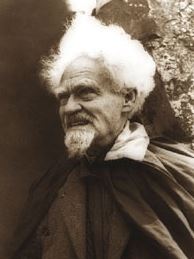
Gerald Brosseau Gardner (1884–1964), often referred to as the “Father of Wicca,” was an English civil servant, amateur anthropologist, and occultist whose work was instrumental in the creation and public emergence of modern Wicca. Born in Lancashire, Gardner spent much of his early life abroad, including significant time in Ceylon and Malaya, where he developed an enduring interest in indigenous spiritual practices and magical traditions. Upon retiring to England, he became increasingly involved in esoteric and occult circles.
In 1939, Gardner claimed to have been initiated into a group he called the “New Forest coven,” which he believed to be a surviving remnant of an ancient pre-Christian witch cult. Although modern scholars have since questioned the historical authenticity of this claim, Gardner used it as the foundation for what became known as Gardnerian Wicca. Drawing on a wide range of sources—including ceremonial magic, Freemasonry, folklore, and the writings of Aleister Crowley—he restructured the coven’s practices into a cohesive religious system with formal rituals, initiatory degrees, and a polytheistic framework centered around a God and Goddess.
Gardner publicly introduced Wicca through several influential books. His 1949 novel High Magic’s Aid, written under the pseudonym Scire, was followed by two groundbreaking non-fiction works: Witchcraft Today (1954) and The Meaning of Witchcraft (1959). These books presented Wicca as a serious spiritual path, helping to legitimise and popularise it during a time when witchcraft was still widely misunderstood and legally restricted.
He founded the Bricket Wood coven in the mid-1940s, which became a central hub for the early Wiccan movement. There, he trained a number of key figures—including Doreen Valiente, Patricia Crowther, Eleanor Bone, and Lois Bourne—who would go on to spread Wicca throughout the UK, the United States, and beyond. His work also introduced enduring Wiccan ethical principles such as the Wiccan Rede (“An it harm none, do what ye will”) and the Law of Threefold Return.
Gardner later opened the Museum of Magic and Witchcraft on the Isle of Man, where he continued to advocate for the legitimacy of Wicca until his death in 1964 while traveling to North Africa. Today, Gardnerian Wicca remains one of the most influential branches of British Traditional Wicca, and Gerald Gardner is remembered as a visionary figure who helped bring a once-hidden tradition into the public eye and laid the foundation for the modern Pagan revival.
 The Damson Moon Coven